




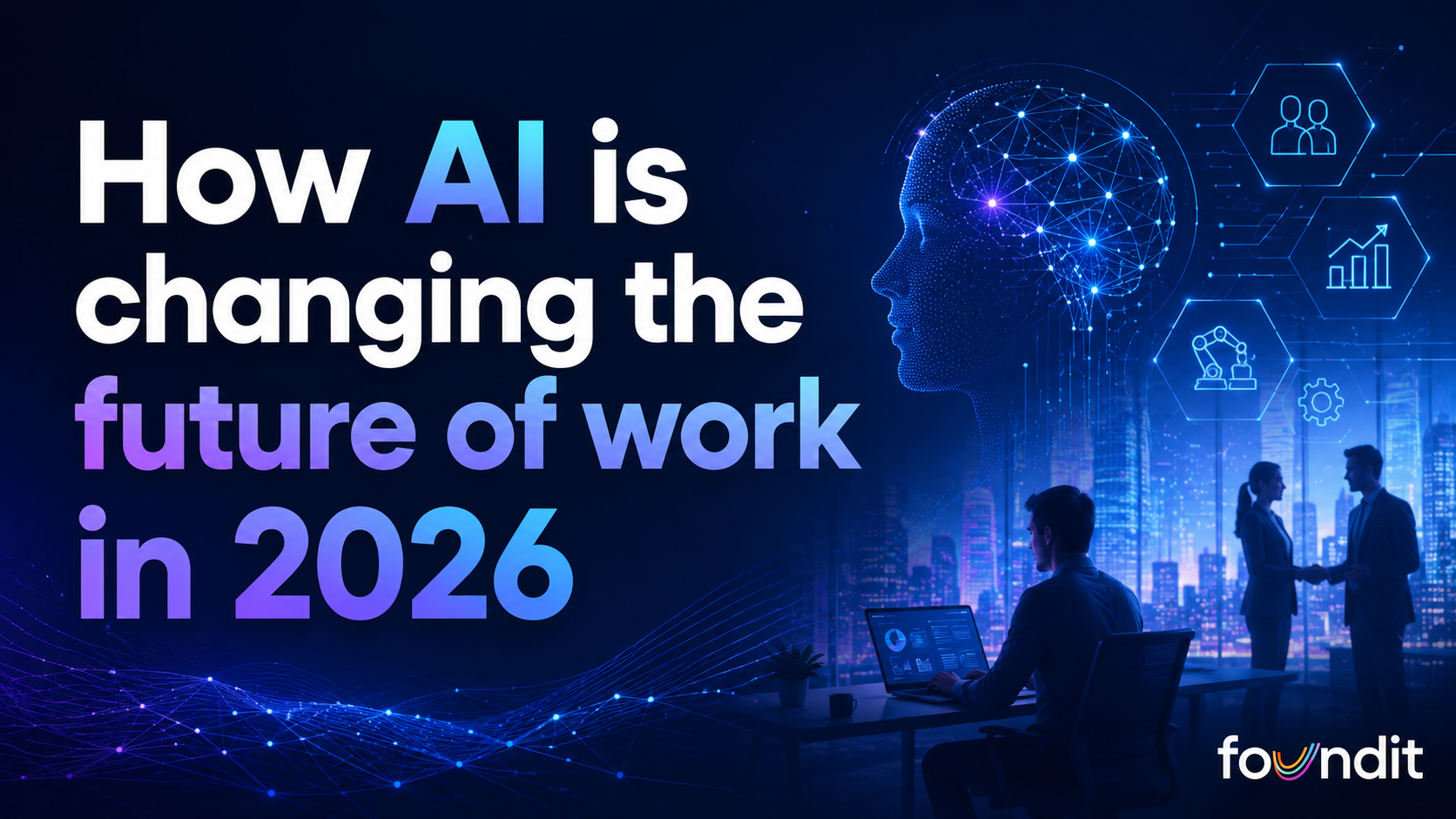
The impact of AI on jobs is becoming increasingly visible as artificial intelligence transforms workplaces across industries. According to the World Economic Forum’s Future of Jobs Report 2025, AI and related technologies could create 170 million jobs globally while displacing 92 million existing roles by 2030.
Since organisations increasingly adopt AI tools to improve productivity and streamline operations, the nature of many jobs is beginning to change. This shift is creating new opportunities while increasing demand for updated AI skills in 2026.
In Singapore, this shift is particularly visible across financial services, technology, and government sectors, where AI adoption is being actively encouraged through national initiatives such as Smart Nation and the National AI Strategy 2.0.
This article discusses the basics of generative AI and employment, changes in work patterns due to AI, and how individuals can be ready for their transformed workspace.
What Does ‘AI Job Displacement’ Really Mean?
Artificial intelligence job displacement refers to a situation where AI systems or machines perform tasks that were earlier completed by humans. This does not always mean that a complete job disappears. In many cases, only certain parts of a role change.
According to the World Economic Forum, workers can expect around 39% of their existing skills to be transformed or become outdated by 2030. This highlights that the impact of AI is likely to be felt through changing skill requirements and evolving job responsibilities, rather than through the disappearance of entire occupations.
Earlier automation mainly affected physical work in industries such as manufacturing. Today, AI can also support tasks that involve writing, analysing information, preparing reports, and handling customer requests.
The change that is occurring now is mainly task-based automation because some tasks in the occupation will be automated but not the whole occupation. Many professionals may continue working but with different responsibilities.
The important question is not only whether AI will replace jobs. It is about understanding which tasks AI can complete and where human skills are still needed.
Reports from different organisations suggest numerous jobs may be affected due to artificial intelligence tools. This creates a need for learning new skills and improving existing abilities.
Is AI Creating More Jobs Than It’s Destroying?
The expansion of AI is presenting new possibilities and redefining old positions. The debate on AI and employment highlights the ability of AI to eliminate certain monotonous activities and at the same time to require new skill sets.
The jobs created by artificial intelligence are projected in fields like data science, cybersecurity, AI engineering, and technology management.
Some emerging growing roles due to AI include:
- AI/ML engineers
- Prompt engineers and AI trainers
- Data annotation specialists
- AI ethics and governance officers
- Robotics maintenance technicians
- Digital transformation workforce consultants
At the same time, jobs that involve repeated tasks may face higher changes. Roles such as data entry operators, basic support roles, and routine documentation work have greater chances of automation.
The challenge is not only the number of jobs available. The bigger challenge is whether workers have the right AI skills for new job opportunities. This is why reskilling for AI era has become important for professionals across industries.
Read Also: AI Jobs for Freshers in Singapore 2026
Jobs Most at Risk vs. Jobs in High Demand: A 2026 Comparison
AI does not affect every job in the same way. Some roles involve repeated tasks, while others require creativity, decision-making, and human interaction. Let’s understand how AI is affecting jobs in Singapore:
| Jobs Most at Risk | Risk Level | Jobs in High Demand | Growth Outlook |
| Data entry clerks | Very High | AI/ML engineers | Very Strong |
| Telemarketers | Very High | Data scientists | Very Strong |
| Basic bookkeeping clerks | High | Cybersecurity specialists | Strong |
| Scripted customer service roles | High | Digital marketing analysts | Strong |
| Assembly line workers | High | Cloud computing specialists | Very Strong |
| Insurance support roles | Moderate High | Robotics technicians | Strong |
| Document review assistants | Moderate High | AI ethics professionals | Emerging |
| Bank support roles | Moderate | Renewable energy technicians | Very Strong |
The purpose of this comparison is not to suggest that every high-risk role will disappear. Many roles will change through job augmentation vs replacement, where AI supports employees instead of fully replacing them.
Read Also: 5 top careers in the field of Artificial Intelligence
How Generative AI is Changing the Workforce: Industry-by-Industry Breakdown
AI is changing different industries in different ways. Earlier automation mainly focused on physical tasks, but today AI can support much knowledge-based activities. The generative AI impact on the workforce can be seen in areas such as technology, finance, healthcare, and customer service.
The role of AI is not limited to replacing tasks. In many cases, it supports employees by reducing repeated work and helping them focus on complex responsibilities. This change is leading to artificial intelligence workforce transformation across industries. Let’s understand the AI automation risk by industry sector:
- Technology and Software
The AI impact on software developer jobs is mainly linked to improving productivity rather than fully replacing developers. AI tools can help write basic code, identify errors, and complete repeated programming tasks.
However, developers still need skills such as system design, problem-solving, and understanding business needs. The role of software professionals is changing towards managing AI tools and creating better technology solutions.
Professionals who understand AI tools along with their existing technical skills may find better opportunities in the changing technology sector.
- Financial Services
The financial sector uses AI for tasks such as fraud detection, data analysis, and customer support. Many companies use AI systems to process information faster and improve daily operations.
AI can support basic analysis and reporting, but human judgement remains important for complex decisions. Professionals working in this sector may need stronger analytical skills and knowledge of AI-based systems.
The growth of AI in finance also highlights the importance of AI reskilling and upskilling for employees who want to remain relevant.
- Healthcare
Healthcare is another sector where AI is creating changes. AI tools can support medical professionals by analysing reports, identifying patterns, and helping with research activities.
However, healthcare requires human understanding, communication, and ethical decision-making. Doctors, nurses, and healthcare professionals still play an important role in patient care.
New roles are also growing in areas such as health data analysis, medical technology, and AI-supported healthcare services.
- Customer Service
Customer service is one of the industries facing major changes due to AI. Many companies use chatbots and automated systems to handle common customer questions.
This does not remove the need for human employees completely. Instead, customer service roles are moving towards handling difficult problems, customer relationships, and situations that need personal understanding.
Employees who learn to work with AI-based support systems can adapt better to these workplace changes.
In Singapore, customer service transformation through AI is particularly advanced within banking and financial services, where institutions have deployed LLM-powered virtual assistants to handle routine queries at scale.
White-Collar Jobs Under Pressure: The Surprising Risk for Educated Workers
The effect of AI is not limited to traditional roles. Many educated professionals are also experiencing changes because AI can support tasks that involve information processing and analysis.
The generative AI impact on white collar jobs is visible in areas such as content creation, research, legal support, and financial analysis. These roles often involve activities that AI systems can assist with.
Employees may spend less time on repeated activities and more time on planning, decision-making, and creative work.
The level of change depends on occupational exposure to AI, which means how much a job involves tasks that AI can perform.
To minimise labor market disruption, professionals should focus on developing new skills and learning how AI can complement their current responsibilities. This can help them stay competitive in a changing workplace.
Read Also: AI Courses for Beginners
Jobs That AI Cannot Replace (Yet)
Many roles continue to require human skills that AI cannot easily copy. These jobs usually involve emotional understanding, physical skills, creativity, and decision-making in uncertain situations.
Let’s understand which jobs are safe from AI:
- Roles Where Human Judgment is Required: Occupations like emergency response staff, social workers, and crisis managers involve making judgments based on practical scenarios.
- Roles That Require Physical Skills: Occupations like electricians, surgeons, mechanics, and others usually work in a practical environment where each scenario is unique.
- Roles Where Emotional Intelligence is Required: Occupations such as therapists, educators, healthcare professionals, and managers require good communication and interaction skills.
- Roles That Require Creativity: Jobs like designers, writers, researchers, and creative professions involve innovative skills that go beyond repeated practices.
- Management of AI Systems: In addition to using AI systems, companies will require professionals who can manage these AI systems and use them responsibly. It makes AI ethics very important in employment.
In the future workplace, there will be more emphasis on collaboration between humans and machines.
The Impact of AI on Jobs in Singapore: What the Data Says
Singapore is among the most AI-ready economies in Asia, with government and private sector adoption advancing rapidly across industries.
The Singapore government’s National AI Strategy 2.0, launched in 2023, outlines a clear commitment to embedding AI across public services, economic sectors, and workforce development programmes.
The effect of artificial intelligence on jobs in Singapore 2026 is evident in fields like information technology, customer service, finance, healthcare, and education.
The Infocomm Media Development Authority (IMDA) and SkillsFuture Singapore are both running structured programmes to help professionals build AI competencies and adapt to changing job requirements.
The government and industry are also collaborating on workforce transition support, ensuring that professionals in at-risk roles have access to reskilling pathways through SkillsFuture credits and structured workforce reskilling programs.
Sectors Growing Fastest for AI Jobs in Singapore
AI is creating new opportunities across different sectors in Singapore. Many industries are adopting AI tools to improve processes, analyse information, and create better services.
The growth of AI is increasing demand for professionals who understand technology along with industry knowledge. Some sectors seeing strong AI-related growth include:
- Financial Services and Fintech
Singapore is a leading global financial hub, and AI adoption in banking, insurance, and fintech is among the highest in the region. Professionals with skills in data analysis, fraud detection, and AI-powered risk management are in strong demand.
- Government Technology
Singapore’s public sector is one of the most digitally advanced in the world. GovTech Singapore actively develops and deploys AI solutions across public services, creating consistent demand for AI engineers, data scientists, and policy-aware technology professionals.
- Logistics and Supply Chain
Singapore’s position as a global trade hub means logistics and supply chain technology is a priority sector. AI tools are being used for route optimisation, demand forecasting, and warehouse automation, creating new technical and analytical roles.
- Healthcare Technology
Singapore’s healthcare sector is investing in AI for medical imaging, patient data management, and personalised treatment support. Professionals who combine healthcare knowledge with data and AI skills are increasingly sought after.
- Professional Services and Consulting
MNCs operating regional headquarters from Singapore are adopting AI tools for legal review, financial analysis, and business intelligence. This is creating demand for professionals who understand both industry context and AI capabilities.
These changes show that the future of work and AI will depend on how well professionals understand technology and apply it in their own fields.
Read Also: 5 Artificial Intelligence jobs in demand and how to get them
How to Future-Proof Your Career in the Age of AI: A Practical Reskilling Roadmap
AI is changing workplace requirements, but professionals can prepare by improving their skills. Reskilling for the AI era means learning new abilities that support career growth in an AI-based workplace.
The goal is not for every professional to become an AI expert. The focus should be on understanding AI and using it effectively in their own field. The following steps explain how to prepare your career for AI disruption:
Step 1: Understand Your Current Role
Start by identifying daily tasks that involve repeated activities. Tasks such as preparing regular reports, organising information, or handling routine processes may have a higher chance of automation.
Understanding these changes can help professionals decide which skills they need to develop.
Step 2: Build Basic AI Knowledge
AI knowledge is becoming useful across industries. Professionals should understand how AI tools work and how they can support daily tasks.
Basic AI awareness can help employees make better decisions and improve work efficiency.
Step 3: Develop Skills That Work Alongside AI
Professionals should focus on skills that AI cannot easily replace. These include communication, leadership, creativity, problem-solving, and decision-making.
Combining industry knowledge with AI skills can help employees adapt to changing job requirements.
Step 3: Acquire Skills That Will Complement AI
The skills that AI cannot replace easily will be useful for professionals. Such skills include communication, leadership, creativity, problem solving, and decision making.
The combination of industry knowledge and skills relating to AI may enable people to adapt to the shifting needs of the jobs.
Step 4: Learn through Courses and Certifications
The courses that relate to the analysis of data, cloud computing, AI fundamentals, and digital technology can be useful for learning new things.
Top Skills That Will Stay in Demand Alongside AI
Let’s understand what skills you need to survive AI automation:
- Critical thinking and problem-solving
- Communication and emotional understanding
- Creative thinking
- Leadership skills
- Ability to learn new tools
- Understanding responsible AI usage
AI can improve productivity, but people need to make decisions, manage situations, and apply knowledge correctly.
Key Statistics: AI and the Future of Work at a Glance
AI is expected to create major changes in the global job market. The following statistics show how AI may influence employment patterns.
- 170 million new jobs expected to be created by AI by 2030
- 92 million jobs may be displaced by AI by 2030
- Net gain of 78 million jobs globally
- Around 30% of work hours may be automated by 2030
- 27% of OECD jobs have high AI automation and jobs risk exposure
- Higher educated workers may experience more AI exposure
- Singapore has committed over SGD1 billion over five years from 2025 to 2030 under its National AI Research and Development Plan, which supports National AI Strategy 2.0 and aims to strengthen public AI research, applied AI, and talent development.
These numbers show that AI can create opportunities while also changing existing roles. The main focus for professionals should be learning how to work with AI.
Conclusion
The impact of AI on jobs is reshaping the way people work across different industries. While AI can automate certain repetitive tasks, it is also creating new career opportunities and transforming many existing roles.
Understanding which jobs will be replaced by AI by 2030, how AI is influencing the job market and developing relevant skills can help professionals adapt to evolving workplace demands.
As AI adoption continues to grow, continuous learning, adaptability, and collaboration will become increasingly valuable. Combining human expertise with AI capabilities is likely to remain important as workplaces continue to evolve.
FAQs
Jobs involving repeated and rule-based tasks may experience changes earlier. Roles such as data entry, basic support work, and routine documentation tasks have higher chances of automation.
According to the World Economic Forum’s Future of Jobs Report 2025, the answer to how many jobs will AI create in the future is significant. The report estimates that AI and related technologies may create around 170 million jobs globally by 2030 while changing many existing roles.
Current reports suggest that AI may create more jobs than the number of jobs displaced. However, the new roles may require different skills, making learning and adaptation important.
Industries such as technology, finance, customer service, manufacturing, and healthcare are experiencing major AI changes because many tasks involve data processing and analysis.
Professionals need skills such as problem-solving, communication, creativity, adaptability, and basic AI knowledge to work effectively with changing technologies.
The impact of AI on jobs in Singapore is visible across financial services, government technology, logistics, and healthcare. AI is creating demand for professionals with technology and industry skills while changing the nature of existing roles.
Professionals can prepare by learning AI basics, improving existing skills, developing human abilities, and staying updated with workplace changes.

 Beware of Scammers
