

A salary increment letter is a formal written request sent to an employer to ask for a raise. It outlines your contributions, achievements, and reasons for requesting a higher salary.
It explains your achievements, the value you bring to the company, and why you deserve an increment. Many employees use this letter when preparing for appraisals or seeking a pay revision.
In this article, you will learn the salary increment letter format, key elements to include, and practical tips to write a strong request with confidence.
What is a Salary Increment Letter
A salary increment letter is a document written to ask your employer for a salary raise. It outlines your performance, key contributions, and reasons for requesting a higher salary.
Employees usually send this letter during appraisal cycles or when taking on additional responsibilities. A clear and well-structured letter for salary increment helps your manager evaluate the request more effectively and increases your chances of a positive response.
Key Elements of a Salary Increment Letter
- Date and employee details at the beginning.
- Recipient information including name, role, and department.
- Subject line that clearly states the request for a salary increment.
- Opening line that introduces the purpose of the letter.
- Highlights of key achievements supported with numbers or outcomes.
- Contribution to team or business goals that strengthens the justification.
- Reason for requesting an increment based on consistent performance or added responsibilities.
- Expected salary revision or preferred increment range, if suitable.
- Professional closing statement expressing appreciation and openness to discussion.
- Signature with full name and contact details.
Read Also: What is Payroll
How to Write a Letter for Salary Increment
- Begin your salary increment letter with a clear statement explaining why you are requesting a salary revision.
- Include specific achievements and numbers that strengthen your salary raise request.
- Keep the tone confident and professional, similar to a standard salary increment request email.
- Focus on business outcomes, team contribution, and value rather than personal financial needs.
- Mention any new duties or additional responsibilities that justify your letter for salary increment.
- Use simple, direct language to help your manager understand your justification quickly.
- If appropriate, mention your expected increment range to guide the discussion around salary revision.
- Close your letter politely and express openness to discuss your salary increment letter in the next review meeting.
Salary Increment Letter Format & Samples
The letter format for salary increment should be simple, clear, and professional. It must include essential details such as your introduction, achievements, reason for requesting the increment, and a polite closing. Most employees prefer sending this as an email, which follows a structured layout similar to a formal business letter.
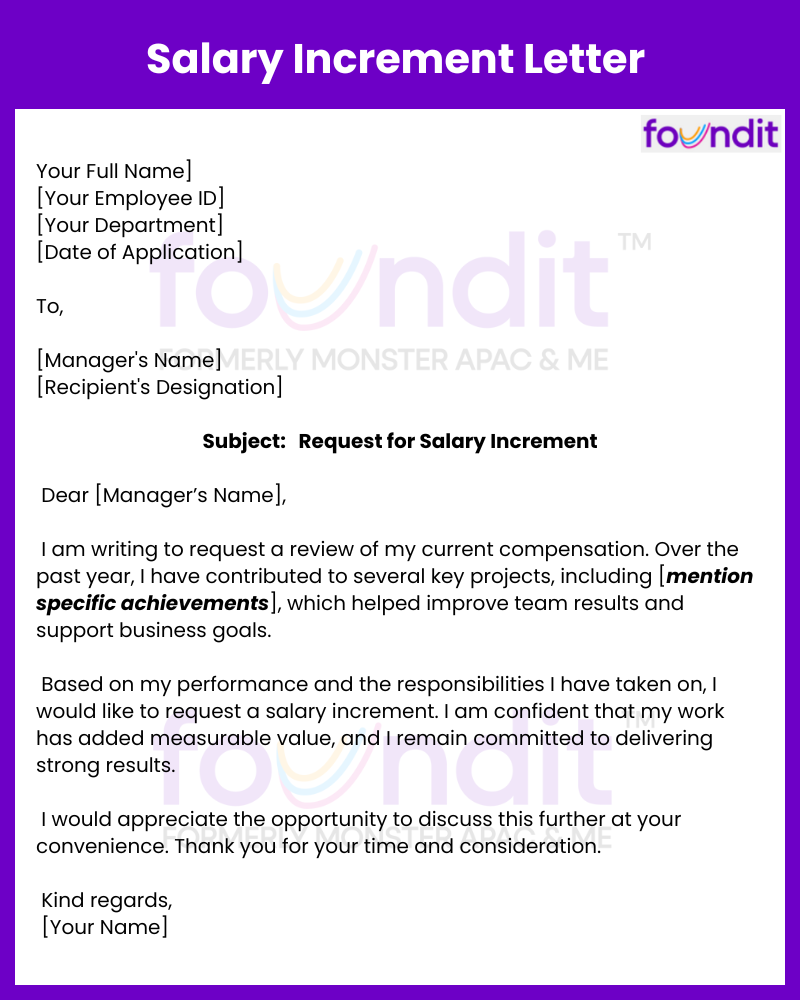
Below is a sample email format you can use when writing your own salary increment letter:
Subject: Request for Salary Increment
Dear [Manager’s Name],
I am writing to request a review of my current compensation. Over the past year, I have contributed to several key projects, including [mention specific achievements], which helped improve team results and support business goals.
Based on my performance and the responsibilities I have taken on, I would like to request a salary increment. I am confident that my work has added measurable value, and I remain committed to delivering strong results.
I would appreciate the opportunity to discuss this further at your convenience. Thank you for your time and consideration.
Kind regards,
[Your Name]
Read Also: Salary Slip Format
When To Write a Salary Increment Letter?
- When your performance review is approaching and you want to support your case with a formal salary increment letter.
- After taking on additional responsibilities or tasks that are not part of your current salary band.
- When you consistently exceed targets and want to request a salary raise based on measurable outcomes.
- After completing an important project that led to strong business results, making your salary increment request more valid.
- When your role has expanded due to team changes and you need a salary revision to match your workload.
- If market standards for your job title have increased and you want to submit a formal increment letter to stay aligned with industry pay.
- When you have spent a long period without a revision and want to send a structured letter for salary increment to initiate the discussion.
Conclusion
Writing a clear and well-structured salary increment letter helps you present your request professionally and highlight the value you bring to your role. Use the right format, mention your achievements, and explain why a salary revision is justified. With a strong letter for salary increment, you improve your chances of receiving a positive response during discussions or review cycles.
FAQs on Salary Increment Letter
What is meant by a Salary Increment Letter?
A salary increment letter is a formal request an employee submits to ask for a salary raise. It highlights achievements, contributions, and reasons for seeking a salary revision. This letter helps managers evaluate performance in a structured manner and supports discussions during appraisals or compensation review meetings.
Is increment calculated on basic salary or CTC?
Many companies calculate increments on the total CTC, while others apply the increment to the basic salary. The method depends on internal policy. Checking your organisation’s compensation structure helps you understand how the salary increment affects your revised pay and benefits.
What details should be included in a Salary Increment Letter?
A strong salary increment letter should include your role, achievements, measurable results, and reasons for requesting a salary raise. Mention recent responsibilities, business impact, and how your contribution supports team goals. End with a polite closing that requests a discussion on your salary revision.
What is the purpose of a Salary Increment Letter?
The purpose of a salary increment letter is to formally present your request for a raise and highlight your contribution to the organisation. It helps managers understand why a salary raise is justified and provides written documentation during appraisals or compensation discussions.
When should a Salary Increment Letter be given?
You should submit a salary increment letter before or during performance reviews, after major achievements, or when responsibilities increase. Many employees share it in advance of appraisal discussions, ensuring managers have time to review performance and consider the request.
When is the best time to request a payment increment?
The best time to send a payment increment letter is when you have recent achievements or completed impactful projects. You can also send it after taking on additional responsibilities. Appraisal cycles are ideal since managers are actively evaluating performance and reviewing salary revision requests.
What is 30% increment in salary?
A 30 percent increment means your current salary is increased by 30 percent. For example, if your monthly salary is ₹30,000 and you receive a 30 percent salary raise, the revised salary becomes ₹39,000. Understanding percentage-based salary increments helps you evaluate offers and negotiate confidently.