
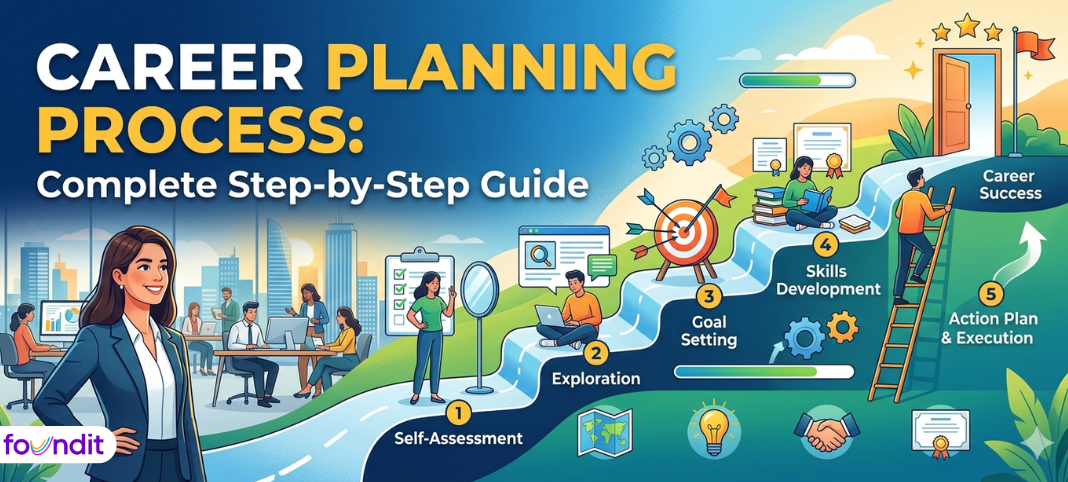
The career planning process creates structured direction for professional growth. It identifies strengths, sets realistic goals, and builds steady progress toward target roles. Without planning professionals drift between opportunities potentially missing optimal paths.
This systematic approach eliminates confusion and accelerates career progression significantly. In Singapore, where the job market is highly competitive and skills-driven, structured career planning plays a crucial role in long-term success. This guide covers what is career planning, the complete 7-step process, common mistakes, and practical execution tips.
What is the Career Planning Process?
The career planning process maps current skills to desired future positions through structured assessment. It connects individuals’ capabilities with their further 3–5 year professional objectives, creating actionable pathways.
Core components:
- Self-awareness of strengths/limitations
- Market-aligned opportunity research
- Specific milestone planning
- Continuous progress tracking
Regular updates keep plans relevant as industries evolve. Professionals revisit quarterly, adjusting for new skills, market shifts, or personal priorities. This is especially relevant in Singapore due to rapid technological advancements and government-led upskilling initiatives.
Why Career Planning is Important
Career planning delivers measurable advantages across experience levels.
Key benefits:
- Clarifies optimal role progression paths
- Identifies skill gaps early
- Increases salary growth faster
- Reduces job change confusion
Step-by-Step Career Planning Process
Below is the step-by-step career planning process that individuals may follow for career planning.
1. Self-Assessment
This is where most career decisions should begin, although many times it gets rushed.
The idea is straightforward. Understand personal interests, strengths, limitations, and values before making decisions.
Some practical questions are:
- What kind of work feels engaging day to day?
- Which skills come naturally?
- What type of work environment feels comfortable?
- What matters more: stability, growth, creativity, or income?
People who enjoy working with data and solving problems may choose analytics or technical employment positions. People who want to interact with others may find marketing and HR roles to be their best career options.
In practice, being honest at this stage avoids a lot of correction later.
2. Explore Career Options
Once there is some clarity, the next step is to look outward.
This is where research becomes important. It involves understanding different roles, industries, and how they align with one’s profile. Many times, people stay within familiar options simply because they know them.
It helps to go a bit wider:
- Review job descriptions carefully
- Speak with professionals already in those roles
- Track industry trends
- Understand the required skills
Take content writing as an example. It is no longer limited to writing articles. In practice, it connects with SEO, digital strategy, and even AI tools. Understanding these early helps to prepare accordingly.
3. Set Clear Career Goals
At this stage, things start becoming more defined, and it helps to set both short-term and long-term goals that are realistic but still challenging. The aim is to clearly identify what needs to be achieved and by when, whether it involves learning new skills, securing an entry-level role, or reaching a specific position or income level over time.
For example:
- Short-term: Learn data analysis within six months
- Long-term: Move into a data analyst role in two to three years
Clear goals bring structure to the process.
4. Identify Skill Gaps
This is where things become more practical.
There is a comparison between current abilities and what the target role requires. Many times, this step brings real clarity.
Common gaps include:
- Missing technical skills
- Limited practical experience
- Gaps in communication or presentation
Once these gaps are clear, the next steps become easier to plan.
5. Build a Learning and Action Plan
Now the focus shifts to action.
The plan does not need to be perfect. What matters more is consistency over time.
Typically, people:
- Take online courses
- Work on small, practical projects
- Apply for internships or entry-level roles
- Build a portfolio
- Start networking
In practice, steady progress works better than waiting for the right moment.
6. Take Action and Gain Experience
This is where plans are actually tested.
This can be done by applying for jobs, freelancing, or even small projects. In most cases, the first job may not be as expected, and that is normal.
However, there are benefits of taking up a job. It gives confidence, exposure, and an idea of what works for you and what does not.
7. Review and Adjust the Plan
A career plan is not fixed. It evolves.
Over time, interests change, industries shift, and new opportunities come up. So, reviewing the plan regularly becomes important.
Some useful questions include:
- Is the current path still relevant?
- Does the work feel aligned with personal goals?
- What needs to change?
In practice, reviewing the plan every six to twelve months helps keep things on track.
Common Mistakes to Avoid in Career Planning
Some common mistakes to avoid while planning are.
- Skipping self-assessment and rushing decisions
- Following trends without real interest
- Setting vague or unrealistic goals
- Ignoring skill development
- Not reviewing the plan over time
Worth noting, career planning works best when it stays practical and honest.
Conclusion
The career planning process provides a clear pathway for individuals to gain direction and structure in their professional journey. It starts from identifying the strengths of an individual, seeking career options, setting goals, and taking consistent action towards achieving the goals. Developing skills is also an integral part of the career planning process.
The career planning process doesn’t need to be linear. However, the step-by-step approach is an effective way of ensuring consistent progress. It is also an effective way of being prepared for any unexpected changes that may come. In Singapore, this structured approach helps professionals stay competitive and future-ready in a dynamic job market.
Career Planning Process FAQs
What is the career planning process in simple terms?
The career planning process uses a structured method which helps people to identify their strengths, their work interests, their career objectives and their most effective pathways to professional development.
Why is step-by-step career planning important?
The process helps to eliminate uncertainty while maintaining focus on activities that support the achievement of professional objectives.
How often should a career plan be reviewed?
Most people need to evaluate their professional development plan between two and six times per year, as their objectives and abilities may change as their life situation progresses.
Can career planning change over time?
The process of career planning may require adjustments as people may develop new interests and abilities while encountering fresh possibilities.
What are the main steps in the career planning process?
The main steps include self-assessment, exploring career options, setting goals, identifying skill gaps, creating a plan, taking action, and reviewing progress regularly.
Is career planning useful for experienced professionals?
Career planning benefits experienced professionals because it provides them with a path to career advancement and job transitions.